

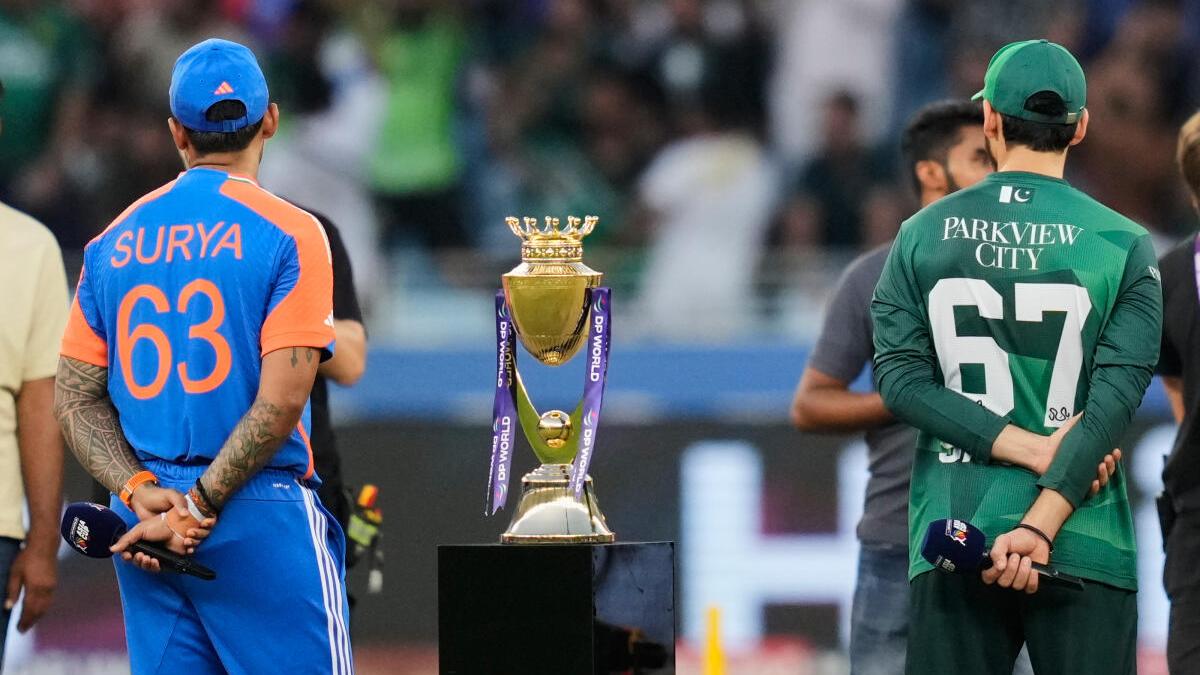

The International Cricket Council (ICC) has indicated that the Pakistan Cricket Board (PCB) could face heavy financial penalties and a significant loss of revenue for forfeiting their ICC Men’s T20 World Cup group-stage match against India, scheduled to be played in Colombo on February 15.
However, former ICC Head of Communications and ex-PCB Media Director Sami Ul Hasan Burney believes Pakistan made the call after carefully weighing the consequences.
Addressing the potential sanctions, Burney told PTI that the financial impact of a single India–Pakistan match goes far beyond broadcasting rights.
“That one match is costing around USD 250 million when everything is accounted for, not just the broadcaster’s losses,” he said.
Burney pointed out that Pakistan has long experience in managing financial setbacks arising from not playing India in bilateral series. He noted that India and Pakistan have not contested a bilateral series in Pakistan for nearly two decades, even though Pakistan toured India in 2007 and again in 2012–13 for limited-overs cricket.
“Pakistan didn’t host India for 20 years. They also played their home cricket offshore for nearly a decade, from 2009 to 2019, mostly in the UAE. Despite that, they won major tournaments — the 2009 T20 World Cup and the 2017 Champions Trophy,” Burney said.
He acknowledged that there would be financial repercussions but stressed that the PCB has shown resilience in the past.
“Yes, there will be losses. But if Pakistan cricket could survive two decades without playing India, they can sustain this as well,” he added.
When asked whether Bangladesh’s standoff with India influenced Pakistan’s stance, Burney said such decisions are taken at a much higher level.
“We may agree or disagree, debate or question it, but when a government takes a decision, it is looking at something bigger than what you and I can see,” he said.
Burney further emphasised that such calls are never made lightly.
“These are not easy decisions. I am sure extensive consultations were held, expert advice was sought, and the legal aspects were thoroughly examined before the government of Pakistan reached this conclusion,” he added.





