

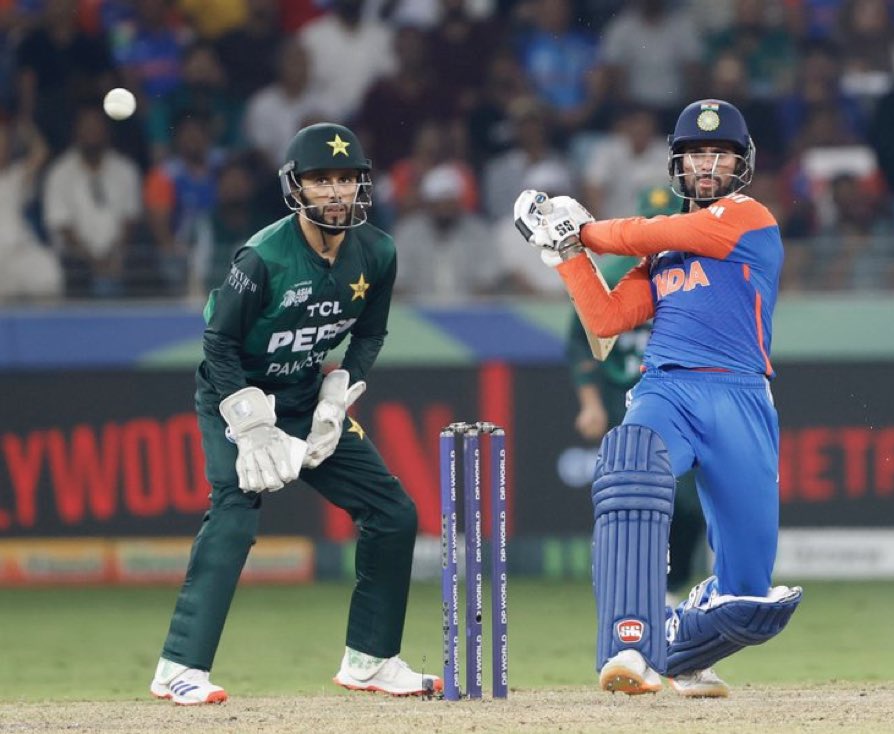

India and Pakistan have long shared one of the fiercest rivalries in world cricket. While the intensity on the field remains unmatched, their contests are often shaped as much by political tensions as by sporting competition.
In the lead-up to their scheduled ICC T20 World Cup 2026 clash in Colombo, tensions resurfaced after the Pakistan Cricket Board (PCB) initially refused to play against India — despite the match being set at a neutral venue in Sri Lanka.
Why Did Pakistan Initially Refuse to Play India?
Pakistan’s decision was linked to the ICC’s move to expel Bangladesh from the tournament after Bangladesh refused to play its matches in India, citing security concerns. The ICC replaced Bangladesh with Scotland.
The PCB and the Pakistan government criticised the decision, calling it unfair and accusing the ICC of applying “double standards.” In response, Pakistan announced that it would not take the field against India in their Group A match in Colombo.
However, the ICC made it clear that selectively refusing to play an opponent violates tournament regulations and undermines the integrity of global events. After nearly ten days of uncertainty, back-channel diplomacy, and discussions involving the ICC and other cricket boards — including Sri Lanka and the UAE — Pakistan withdrew its boycott. The Pakistani government eventually directed the team to honour the fixture on February 15, 2026.
When Did India Last Play in Pakistan?
India last played cricket in Pakistan during the 2008 Asia Cup (June–July 2008). Their most recent match on Pakistani soil was the Asia Cup final against Sri Lanka on July 6, 2008, at the National Stadium in Karachi.
That remains India’s last appearance in Pakistan.
When Did Pakistan Last Play in India?
Pakistan’s most recent match in India came during the 2016 ICC T20 World Cup. They played Australia on March 27, 2016, at the Punjab Cricket Association Stadium in Mohali.
That tournament marked Pakistan’s last cricketing appearance in India.
Why Did Bilateral Cricket Stop?
Although tensions between the two nations had existed earlier, the major turning point was the November 2008 Mumbai terror attacks (26/11), in which 166 people were killed. The attacks, carried out by Pakistan-based terror group Lashkar-e-Taiba, led to a sharp deterioration in diplomatic and sporting ties.
Following the attacks:
- India suspended bilateral cricket relations with Pakistan.
- The Indian government declined approval for tours to Pakistan.
- Public and political sentiment in India strongly opposed sporting engagement.
The last full bilateral series India played in Pakistan was in 2006 (Tests and ODIs). Pakistan toured India in 2012–13, but India did not reciprocate with a return series.
Subsequent incidents, including the Pathankot (2016) and Uri (2016) attacks, further escalated tensions. Since then, bilateral cricket between the two nations has remained suspended.
What Is the Current Arrangement for ICC Events?
In 2023–24, India and Pakistan reached a mutual understanding regarding ICC tournaments for the 2024–2027 cycle:
- India will not travel to Pakistan for ICC events hosted there.
- Pakistan will not travel to India for ICC events hosted there.
- Matches involving the two teams will be played at neutral venues under a “hybrid model.”
This arrangement ensures participation in global tournaments without requiring government approval for cross-border travel.
Under this model:
- India’s matches in the 2025 Champions Trophy, hosted by Pakistan, were played at neutral venues.
- In the ongoing T20 World Cup 2026, hosted by India, Pakistan’s match against India is being held in Colombo.
Despite decades of political strain, the India–Pakistan rivalry continues to capture global attention. While bilateral cricket remains frozen, ICC tournaments — played under neutral arrangements — remain the only stage where the two cricketing giants lock horns.





