

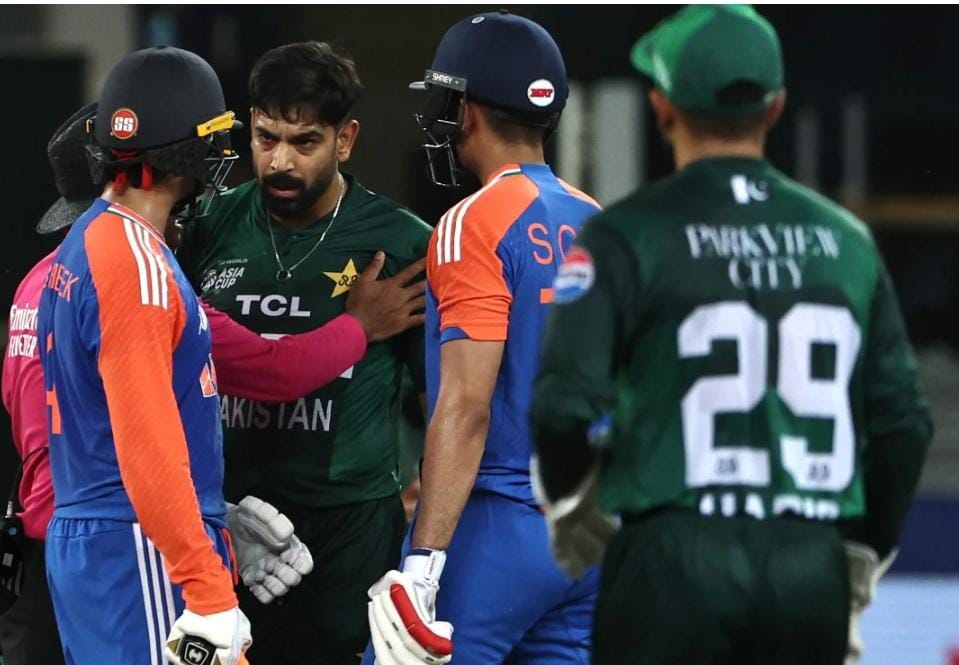

Forty-one years after the first Asia Cup in 1984, India and Pakistan have finally reached a final together. The road has been tense — two meetings in the group stages ended in comfortable Indian wins, but the cricket has often been overshadowed by political undercurrents, lack of handshakes, and heated exchanges, all stemming from military conflict between the two nations earlier this year.
Sunday’s clash isn’t just another India–Pakistan game. It carries layers of politics, pride, and pressure. India’s refusal to shake hands on government advice has already triggered ICC hearings and fines, adding further weight to an already fiery contest.
India: Wins mean nothing if they lose now
Suryakumar Yadav’s side may have two convincing victories over Pakistan behind them, but all that will count for little if they falter in the final. Suryakumar himself stirred the pot by saying the rivalry has “lost its edge” given India’s dominance — 12 wins in 15 T20Is against Pakistan. That statement could sharpen the pressure.
Pakistan: Underdogs with a shot at revival
For Salman Agha’s men, a title here would be a much-needed lift. Pakistan have won the Asia Cup only twice, compared to India’s eight and Sri Lanka’s six. Their campaign began unconvincingly, nearly undone by Bangladesh, before clawing their way back to form. Beating India now — after two defeats in the same tournament — would dramatically alter the narrative around their cricket. Lose again, though, and the scars deepen.
Spotlight Players
Shubman Gill – A highest of 47 in five knocks isn’t alarming, but his dismissals — bowled by Shah Faisal’s late inswing against Oman and beaten by Faheem Ashraf against Pakistan — have looked like old habits resurfacing. He has looked fluent without producing the defining innings India need at the top.
Abrar Ahmed – With an economy rate of 5.02, the best of the tournament (min. 8 overs), he has been Pakistan’s control bowler. Against India, though, he’s had contrasting outings: miserly (4-0-16-1) the first time, expensive (4-0-42-0) the second. His spell in the middle overs could be decisive.
Team News
- India: Jasprit Bumrah and Shivam Dube return after being rested. Arshdeep Singh and Harshit Rana make way. Hardik Pandya and Abhishek Sharma cramped up against Sri Lanka but remain fit.
Likely XI: Abhishek, Gill, Suryakumar (capt), Tilak, Samson (wk), Hardik, Dube, Axar, Kuldeep, Varun, Bumrah. - Pakistan: Hasan Nawaz was discussed as a possible inclusion but, given India’s spinners, they are expected to stay unchanged.
Likely XI: Farhan, Fakhar, Saim, Hussain Talat, M. Nawaz, Salman Agha (capt), Faheem, Haris (wk), Shaheen, Rauf, Abrar.
Conditions and Pitch
Dubai nights remain searing at 36°C. Dew could creep in late, though it hasn’t been a factor yet. A fresh centre strip will be used — first-innings average of 156 across the last five years suggests spin will play a major role.
Stats and Trivia
- Abhishek Sharma has three fifties in a row. No Indian has ever made four in consecutive T20Is.
- India are unbeaten so far, with six straight wins. They were unbeaten in the 2016 (T20Is) and 2018 (ODIs) editions too.
- Arshdeep Singh recently became the first Indian with 100 T20I wickets. Hardik needs two more to join him.
- Abrar Ahmed’s 4-0-8-1 against Sri Lanka was the most economical four-over spell in Asia Cup history.
- Haris Rauf has 17 wickets in 10 Asia Cup T20 matches — joint-highest with Wanindu Hasaranga.
Quotes
“It would be wrong to say an India–Pakistan match doesn’t carry more pressure. It’s the final. There’ll be pressure on both sides.”
— Pakistan captain Salman Agha
“We haven’t yet played a complete game. Whether it’s strike rotation, partnerships, or bowling accuracy in the Powerplay — those are areas we’re still pushing to improve.”
— India bowling coach Morne Morkel
For once, the Asia Cup final needs no selling. After four decades of waiting, the dream match-up has arrived. Now it’s up to the players to make the cricket worthy of the occasion.





