

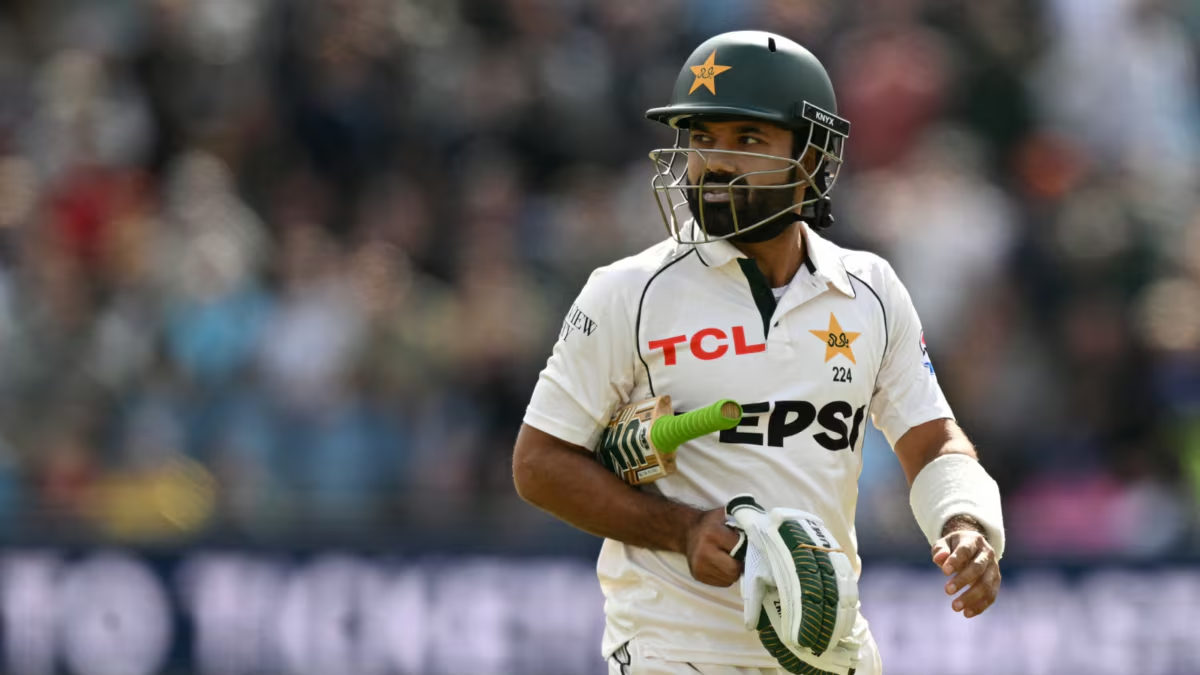

Pakistan wicketkeeper-batter Mohammad Rizwan has reportedly written to the country’s National Cyber Crime Investigation Agency (NCCIA), seeking clarity on why he is being investigated and the disciplinary violation he has allegedly been accused of.
According to Geo, Rizwan’s letter included questions such as, “Why was I called by the NCCIA?” and “I want to know for what reason you are calling me,” as he sought details about the nature of the investigation.
The senior batter is also reported to have questioned why his mobile phone, which was confiscated during Pakistan’s recent tour of England, has not yet been returned.
Rizwan was sent home midway through the England tour after struggling with the bat in the first two matches. He was subsequently summoned by the NCCIA for questioning, forcing him to miss an ongoing domestic red-ball tournament.
The Pakistan Cricket Board (PCB) and NCCIA have not officially revealed the reasons behind the investigations involving Rizwan and fellow batter Imam-ul-Haq.
However, reports in the Pakistani media have claimed that the probe is examining the players’ financial transactions and bank records during their time in England, along with their correspondence, messages, calls and contacts.
While Rizwan came under scrutiny following his poor run with the bat, Imam’s case reportedly involves an additional controversy. The left-hander has been accused of faking an injury during the second Test against England.
The PCB had stated after the first day of the match that Imam had suffered a calf injury. However, he did not come out to bat at any stage of the match, despite Pakistan being in a position where even a partially fit Imam could potentially have been used.
Reports have also claimed that Imam has previously had a brief history of suspicious injuries and was on occasions spared bans following interventions from former cricketers and coaches.
The allegations surrounding both players remain unconfirmed, with the PCB and NCCIA yet to publicly disclose the specific grounds of their investigations.