

The Duleep Trophy 2025 is set to return to its traditional zonal format, restoring a sense of regional rivalry and pride that was missing during last year’s four-team all-star experiment. Long regarded as the crucial bridge between domestic cricket and India A selection, the tournament will once again act as a proving ground for both emerging talent and experienced campaigners.
The competition kicks off on August 28 at the BCCI’s state-of-the-art Centre of Excellence (CoE) in Bengaluru, with six zones — North, South, East, West, Central, and NorthEast — vying for silverware. With two India A Tests against Australia A also on the horizon, the performances here are set to carry extra weight in the eyes of national selectors.
Big Names, Bigger Stakes
This year’s squads are stacked with quality. The BCCI has mandated that available Test players must feature in domestic cricket, ensuring the Duleep Trophy carries top-tier representation.
- North Zone: Named India’s Test skipper Shubman Gill as captain, though his participation remains doubtful due to illness. The pace unit, led by Arshdeep Singh, Harshit Rana, and Anshul Kamboj, provides plenty of bite.
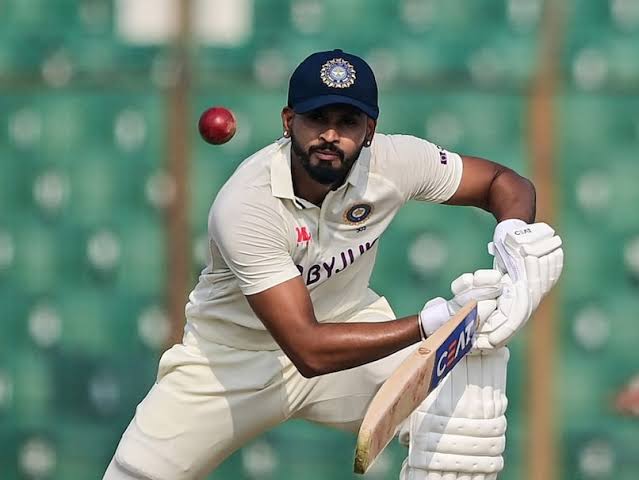
- West Zone: Boasts a powerhouse batting order of Shreyas Iyer, Sarfaraz Khan, Ruturaj Gaikwad, and Yashasvi Jaiswal, under the leadership of Shardul Thakur.
- East Zone: Headlined by Mohammed Shami, Mukesh Kumar, and Riyan Parag, with Abhimanyu Easwaran leading until Ishan Kishan joins mid-tournament.
- Central Zone: Could be the dark horses. Led by Dhruv Jurel with Rajat Patidar as deputy, their attack includes Kuldeep Yadav, Khaleel Ahmed, and Deepak Chahar.
- NorthEast Zone: Skippered by Rongsen Jonathan, the side views the tournament as a rare opportunity to test themselves against elite opposition.
- South Zone: Raised eyebrows by initially leaving out stars like KL Rahul, Mohammed Siraj, Washington Sundar, Sai Sudharsan, and Prasidh Krishna. Tilak Varma will lead, though late additions are expected.
However, squad availability may change mid-tournament, with several big names — including Gill, Arshdeep, Kuldeep, Rana, and Tilak — likely to depart for the Asia Cup in the UAE from September 9.
Why the Switch Back Matters
The BCCI has reverted to the knockout format, giving direct semifinal entry to 2023 finalists South and West Zone. The move follows widespread feedback from State associations, who felt the zonal system preserved the tournament’s identity.
“There’s a different kind of fun when zones play each other,” said Bengal coach Laxmi Ratan Shukla. “We requested this change, and it’s good that tradition has returned.”
Former selector Saba Karim echoed that sentiment, noting that the tournament must function as a stepping stone to India A.
“The pathway should be Ranji → Duleep → India A → National team. With zonal selectors and national oversight, it becomes easier to identify players capable of moving up the ladder,” he said.
Spotlight on India’s Pace Pool
One of the key narratives this year is India’s pace-bowling depth. Injuries and inconsistency have left the Test bench thin. While Kamboj had a trial by fire in England and Arshdeep has flirted with selection, consistency remains the missing link. The likes of Shami, Mukesh, Khaleel, and Rana will all see the tournament as an audition to either consolidate or reclaim their places.
With the CoE track expected to assist pacers early before flattening out, the stage seems set for both bowlers and batters to make strong cases.
No Room for Error
With a knockout structure, there’s little margin for slow starts. For selectors, these five matches will provide a sharper picture of depth across positions ahead of a packed international calendar.
Former India international Amay Khurasiya believes the format change particularly benefits bowlers:
“The Ranji season is already long with seven matches plus knockouts. A round-robin Duleep on top of that would’ve been too hectic. A knockout format gives fast bowlers breathing space and keeps quality high.”
As the Duleep Trophy unfolds at the BCCI’s new home of excellence, it will not only revive regional rivalries but also double up as a high-stakes audition for India’s next crop of stars.